Sunday, February 27, 2011

Best 80's Exercise Costume

Death / Thomas Mann

Death
Thomas Mann


September 10 has finally come autumn, summer will not return. I'll never see ...
The sea is gray and quiet, and light rain falls, sad. When I saw this morning, I waved goodbye to the summer and autumn, the number forty of my fall, that has finally arrived, inexorable. E inexorably bring with it that day, as sometimes date recited quietly, with a feeling of seclusion and intimate terror ...


September 12 I went for a walk a little with the small Assumption. It is a good companion, he is silent and sometimes I look at me raising her large eyes full of affection.
We went down the road from the beach to Kronshafen, but turned around in time before you found us more than one or two people.
As we returned I was happy to see the look of my home. How well had chosen! From a hill, which was now dead grass and wet, watching the sea of \u200b\u200bgray. Gray is also simple and the house. Along the back passes road, and there are fields behind. But I do not look at it, look only to the sea.


September 15
This solitary house on the hill near the sea and under the gray sky is like a dark legend, mysterious, and that's how I want it in my last fall. But this afternoon, as he sat at the window of my study, we presented a car that brought supplies, the old Franz helping to unload, and there were noises and voices. I can not explain how much it bothered me. Shaking with anger, and ordered that such a thing was done in the morning, when I sleep. The old Franz said only: "As you have, Count," but I looked irritated eyes, expressing fear and doubt.
How could understand? He does not know. I do not want vulgarity and boredom stain my last days. I have fear of death may have something bourgeois and ordinary. Must be arcane and strange around me at that big day, solemn, mysterious, of 12 October ...


September 18
In recent days I have left, but I've spent most time on the couch. I could not read much, because doing so tormented me all my nerves. I simply lie down and watch the rain falling, slow and relentless. Assumption
has often, and once brought me flowers a wet and slimy plants found on the beach when he kissed the girl to thank her, she cried because I was "sick." What impression was inexpressibly painful to me their love melancholy!


September 21 I have spent much time sitting at the window of the study, with Assumption on my knees. We watched the sea, gray and huge, and behind us in the great room of tall white door and furniture rigid silence reigned. And slowly stroking the soft hair of the creature, black and straight, falling on his shoulders, I remembered my life variegated and varied remembered my youth, quiet and protected, my wanderings through the world and the short, bright days of my happiness. Do you remember that lovely creature of ardent affection, under the velvet sky of Lisbon? For twelve that made you the gift of a child and died, encircling your neck with her slender arm. Asuncion has
The small black eyes of his mother just more tired and thoughtful. But above all has the same mouth, that mouth so infinitely soft and somewhat bitter at the same time, which is more beautiful when it is silent and merely smiled slightly. My little Asunción
!, If you knew that I shall leave you. Are you crying because I thought "sick"? Ah! What is to do that? What has that to do with the October ...?


September 23
The days I can think and get lost in memories are rare. Many years ago I can only think ahead, just waiting for this big day and chilling, the October 12th fortieth year of my life.
What will? What will? I have no fear, but I think it comes with agonizing slowness, this October 12.


September 27
The old doctor Gudehus Kronshafen wine, arrived by car on the road and had lunch with the small Assumption and me.

"It is necessary," he said while eating half a chicken, make you exercise, Count, plenty of exercise outdoors. Nothing to read! Nothing to ponder! I'm afraid you're a philosopher, heh, heh!

I shrugged my shoulders and thanked him sincerely their efforts. He also gave advice concerning the small Asunción, watching her smile a little forced and confusing. Has had to increase my dose of bromide, maybe now I can sleep a little better.


September 30 - The last day of September! And requires less and less needed. It's three o'clock, and I even calculated how many minutes left until the start of October 12th. Are 8.460.
I could not sleep tonight because the wind has risen, and hear the sound of the sea and rain. I have been cast, let time pass. Think, ponder? Ah, no! Dr. Gudehus making me a philosopher, but my head is very weak and I can only think: Death! Death!


October 2
I am deeply moved, and my excitement is a sense of triumph. Sometimes, when I thought and looked at me with doubt and fear, I realized that I took for a madman, and I looked at myself with distrust. Ah, no! I'm not crazy.
I read today the story of the Emperor Frederick, who prophesy I would die sub flore. So avoiding the cities of Florence and Florentinum, but on one occasion ended up in Florentinum, and died. Why did he die?
A prophecy in itself does not matter, depends on if he gets hold of you. But if it succeeds, is demonstrated and therefore is fulfilled. How? Why a prophecy that comes from myself and strengthened, not be as valid as that coming out? And is the firm knowledge of when to be dying, is not as dubious as that of the place?
There is a constant union between man and death! With your will and conviction, you can join your area, you can call to come to you at the time that you create ...


October 3
Many times when my thoughts are spread before me like a gray water, I seem endless because they are obscured by the fog, I see something like the relations of things, and I recognize the futility of concepts.
What is suicide? A voluntary death? No one dies accidentally. The life and leave him to death always occurs because of weakness, and weakness is always the result of a disease of body or mind, or both at once. Do not die before having one made with the idea ...
as I Am? So I think, because I think it would be crazy if it died on October 12 ...


October 5
I keep thinking about it, and I fully occupied. I reflect on when and how I had this assurance, and I find myself unable to speak. At nineteen or twenty years and knew what was coming when they were forty, and sometimes insistently asked me what day would take place, I also discovered the day.
And now this day has come so close, so close that I seem to feel the cold breath of death.


October 7
The wind has become more intense, the sea roars and the rain drumming on the roof. Overnight I have not slept, but I've come to the beach with my raincoat and I sat on a rock.
Behind me in the dark and rain, was the hill to the gray house where we slept the small Assumption, my little Asunción. And to me, pushing his murky sea foam before my feet.
I looked all night, and I thought that this must be death or the afterlife of death was front and infinite darkness, filled with a dull roar. "There would survive an idea, a bit of me, ever hear the incomprehensible noise?


October 8
I must give thanks to the death when it comes, as all will be fulfilled as soon as I get when I can not go on waiting. Three short days of autumn yet, and will occur. I hope the last minute, the last true! Do not be a moment of ecstasy and unspeakable sweetness? A moment of maximum pleasure?
Three short days of autumn yet, and death shall come in my room ... How do you lead? Will I be treated like a worm? "He grabbed my throat to choke? Or with your hand penetrate my brain? I imagine big, beautiful and a wild majesty.


October 9
Assumption I told when I was on my knees, "What if I leave early in your hand, in some way? Would you be sad?" She leaned her head on my chest and wept bitterly. My throat is choked with pain.
Moreover, I have a fever. My head burns, and trembling with cold.


October 10 was here tonight, tonight! Never saw nor heard, but despite that I talked to her. It's ridiculous, but it acted as a dentist: "It is better that we end soon," he said. But I would not and I defended myself, I threw in a few words.
"It is better that we end soon!" How those words sounded! I I felt pierced. How utterly indifferent, boring, bourgeois! I've never known a feeling so cold and sardonic disappointment.

October 11 (at 11 pm)
Do you understand? Oh! Believe me, I understand!
hour and a half ago I was in my room and entered the old Franz, shaking and sobbing.

- Miss "he cried. The girl! Please come soon!

And I went away. I did not cry, and just shook me a cold shudder. She was in her bed, and her black hair framed her small face, pale and painful. I knelt next to it and not think anything or do anything. Gudehus doctor arrived.

"It was a heart attack," he said, shaking his head as one who is not surprised. That Old rustic was as if I knew anything really!

but I, I understand? Oh, when I was alone with her rumored-out rain and the sea, the wind moaned in the chimney, banged the table, so clearly the truth enlightened me a moment. For twenty years I have called the death a day starting in about an hour, and in me, deep down, there was something I always knew he could not abandon this child. Could not die after midnight tonight; however, so it should happen! I would again reject it when it is presented: but she went before the girl, because I had to obey what I knew and believed. Have I been myself who has called the death of your bed, you've killed me, my little Assumption? Ah, words are crude and miserable things to talk about such delicate, mysterious!
Bye bye! Maybe I find out there an idea, something about yourself. Well, look: the hand of the clock is ticking, and the lamp that illuminates your sweet face will soon go off. Keep your hand, small and cold, and wait. Soon she will approach me, and I'll do it they nod and close your eyes when you hear say

"It's better that we end up soon ... FIN

Wednesday, February 23, 2011

Water Retention When Travelling

screens and books in the same world / Roger Chartier

The renowned French historian stresses the importance of school as a key tool to achieve a harmonious relationship between digital technology and culture of the printed book.

When it comes to analyzing the past, present or the future of the book, it is essential to tap into the thinking of Roger Chartier (Lyon, 1945). Of his numerous works on the practices of writing and reading in the West may include the classic The world as representation (Gedisa, 1992) and more recent Listening to the dead as his eyes (Katz, 2008). A few weeks after receiving an honorary doctorate from the University of San Martin, the French historian adncultura spoke with some of the issues he was passionate about: books, disputes with digital culture and education.

"In his inaugural lecture at the Collège de France, entitled" Listening to the dead eyes, "you ask an elementary question, basically, that I would return here. The question is what is a book.
"There are several definitions that we can consider, such as those arising from the metaphors used in the Golden or conceptual distinctions century XVIII, who argue that the book has body and soul. Or that the book, as Kant said, is on the one hand, a mechanicum opus, a material object produced by a technique which the object belongs to whoever buys it, and, secondly, a speech, a play intended for a that in that sense, belongs to whoever wrote.

- What happens to the meaning of the work? Is property of the author or the reader?
"The situation is really complex. Because what the reader reads a book, but the authors do not write books. Written works, speeches that others, editors, printers, typesetters, transformed into books. This transformation provides a way to text sometimes overflows or even contradicts the author's intentions. And what is appropriated by the reader is the text as material. But on the other hand, the construction of meaning that makes the reader does not refer only to their expectations or categories, but also to the reading experience that each produces a particular text. Hence, for me, the need to link three elements in the analysis: the compositional procedures, appropriations (both in the same society as over time) and the material is written and printed items.

-On several occasions has referred you to a process of "dematerialization of the work, which is enhanced for several centuries. What are the causes and scope of this dematerialisation?
"There are many reasons that have wiped out the effect of registration materials. First, the definition of literary property promoted in the eighteenth century, which states that the author is the owner of a text, regardless of their material forms successive or contemporaneous. The copyright protects the work in its immaterial essence, in its dimension of aesthetic and intellectual production. And from that moment the law itself operates the dematerialization of the work. It is very interesting that arise when disputes over copyright. There we see the problem of defending the copyright of an author about his work at a time when the Enlightenment dream indicated the possibility of appropriating all the ideas that were considered useful for the progress of humanity. Some authors such as Condorcet in France, which radically rejected any notion of copyright, because they believed no one could appropriate the fundamental ideas of the Enlightenment process.

- What are the other reasons for the dematerialization of the work?
"Another key reason is linked to the reception. In this sense, is the reader himself who dematerialized the work by reading it. Unconsciously, creates a relationship in which the text loses all forms particular specificity. It is the discourse of the other with which the reader talks, which penetrates, or is the discourse that passes through it.

-naively, the reader can experience the text as a kind of inner voice, detached from all materiality. But also, from a naive at all, much of literary criticism has rejected the materiality of the text.
"Actually we could say that this was reinforced by the entire literary criticism, both for the more classical and for which came from structuralism. The classical tradition, for which the text is in the heart or mind of the author, did not address the material form, but the intention the author. But neither did the criticism originated in French structuralism, but somehow erased the author ranked the sense in linguistic functioning of the speech, leaving no room for the effect of materiality, the registration form.

"When you issued the revolutions of literacy (Gedisa, 2000, French edition, 1997), the de-saparición the book as object appeared imminent. However, there are still many readers who remain faithful to the book of paper.
"At that time there was an address contained in a prophetic stance that predicted the immediate disappearance of the book. Some had this with enthusiasm and others rejected. I think we've come out of this antagonism, in particular thanks to the idea that making sense of a text, whether by its author, whether by its reader, is not independent of the form of registration. It is seen that there is no equivalence between a text on the screen and text in printed book form. Even though the text could be considered linguistically the same, the relationship with him is completely different. Not only in terms of body posture, but also the practice of reading is different.

- What are the differences?
"A central element, key, reading is the relationship that can be set at all times and immediately between the excerpt, and the entire work: consistency and identity. Both in the case of the novel as in the trial, is that the printed book allows this relationship to a facility that is not in the mail. In the digital world, the fragment out of context of the whole to which he belonged. This is a property that favors the texts are fragments of a database, because it assumes that nobody will read a database in its entirety. But when is a book that is in a narrative or argumentative demonstration, is that the expectation of the reader (at least the reader who entered the world of literacy with print books) stays true to the book object, which, while not being forced to read every page, provided the relationship between fragment and whole becomes possible.

"In this situation, does it make sense to maintain the distinction between body and soul in the book?
-Currently, besides the book as a particular object is the computer, which carries all the texts and also serves to read and write. Now, if it becomes complex to keep the book as a body, what remains of the book as a discourse or the book as a soul? This is all the discussion on the subject of e-book concept. How can we maintain the view identification of the book as a work in the digital world?

- Is it possible?
"The problem is that the digital world, in its origin, said the idea of \u200b\u200bmobile text, malleable, open, distributed free. A series of concepts that oppose term by term with the criteria that defined the book as a discourse in the eighteenth century, that is, a work that is not mobile in their text, although it may be in form, "for no is malleable, which is imposed by the registration form, which belongs to an author who has rights to both economic and moral on her, and, finally, that circulates through the publishing and library market.

- This opposition continues to be valid?
"There is a tension between two positions. On the one hand, those who claim that the world could be a world texts of speeches without owners, produced in a polyphonic and spreading of originality, referred to the thought or the feeling of a single individual. On the other, those who seek to introduce into the digital world with means to maintain the category of uniqueness, originality and ownership. Ie, that texts are closed, the reader can not intervene in them, that access is not necessarily free of charge but, as in the case of a printed book, involving a payment, and recognition the work as something mobile, as it can go from one computer to another, but that is not open, that is identified as a composition that has an originality and uniqueness that refer to the proper name of its author.

- What do you think of the increasingly frequent cases of thought and written texts for the electronic world (blogs, web pages) but which are later published as books on paper?
"There is a kind of ironic revenge of the classical form of the book. For those writing practices that have their origin and their meaning in the digital world, with a brief, time sequence, with an openness to dialogue with the reader- today are in a format that is inconsistent with the logic that has led to the writing. This could be interpreted as evidence of the force that perpetuates the printed object. But at the same time, can be interpreted as the strength of the proposal for a new way of writing was invented precisely because he was away, distant from the classical criteria of writing for the printed text. This reinforces the idea that only a radical replacement, what we see today are multiple forms of coexistence between writing and recording digital print. Screens and printed books can cohabit the same world: this is something we experience every day.

- Are there factors that can disrupt the harmony of the living?
"First, do not think that everyone has immediate access to technology. Even developed countries have cultural boundaries, economic, technical terms such access. This is something that should not be forgotten. But that division is added to a generational problem. Is fundamental difference between those who entered the screen from the written word, written or printed, and younger, conversely, sometimes entering the world of literacy from an experience that has built and is experienced each day in front of the screen.

-Young that are very adept at reading and writing text message but have difficulties in studying academic texts.
"Exactly. We are faced with new generations of readers who have built their habits in front of a textual inscription has little to do with the classic practice of the book, journal, etc.. In such cases is likely to be difficulties in reading by an inappropriate application to printed texts in the way of reading that has been built in front of the screen and that is the discontinuity, segmentation, fragmentation. This is a fundamental challenge that must be seen and already considered "school.

- What is the role school? "Train children in the new technologies or to insist on presenting a traditional lecture mode, which is considered in crisis?
-Both. Because on one hand, it is absolutely necessary to provide facilities for all citizens to enter the digital world that is imposed on them every day. It is a world not only for pleasure, games. It is also the world of administrative form, the world used to build everyday. Thus, the new form of illiteracy could be exclusion from the digital world: people can read and write but unable to enter this new world of multiple business forms, games, discovery of learning. In this perspective, the school must give a central place in the presence of the digital world. On the other hand, of course, the school must remain the place in which to learn the written culture in its most traditional. Must show that there are different ways of reading reading and fast batch occurs off screen, and that these forms can be useful precisely because they are different.

- Is a task that the school can pursue?
"I think that is a huge task, difficult, which asks teachers, but this relationship would maintain dual dialogical understanding necessary for citizens of XXI and XXII century. Children can not be out of the digital world that is everywhere. It is similar to what happens with television. The school can not turn it off. What you can do is teach to use: to discriminate, to choose, to criticize. Similarly, entry into this world must be accompanied by a sustained relationship with the past is still present. That is, the past present of the existence of some texts or works with a form that allows the digital-plus-an understanding and making sense-and thus, the individual-in its critical relation to society or other or with nature. Gustavo Santiago

DNA
Culture

Cross Stitch Dora The Explorer Free

arms exporter Russia is ready to be 2 hours of your time

In tropical countries the difference in the course of the day between summer and winter is negligible and therefore not use the time shift system in winter and summer so common in North America , Europe, Russia and some countries in the Southern Hemisphere since as we get closer to the poles the extension of daylight clarity depends directly on the station of an-o, with summer maxima and minima in winter.

detailed world map of countries that use the system currently DST change and winter (blue) or which was in use (orange), as also those in which he has never been used (red)

In many countries where the system remains in place is fierce dispute between those who are in favor of maintaining and proponents of repeal. The main arguments are related to electrical energy savings while opponents talk about a variety of give-you that would cause the health of the displaced living given by the natural time zone, especially in nin- years and older as well in chronic patients.

However, those who are in favor, argue that the adaptation to the time change occurs quickly and that any negative effects associated with removing 1 hour (summer time) is offset by the positive effects that would occur when you add 1 hour (time winter). While those who are against claim that energy savings are minimal and would be much greater if the establishment of an energy-saving policy.

In the particular case of the Russian Federation authorities say that the change to daylight saving time can save the country 4.4 billion kW-h of electric energy, equivalent to 0.5% of its electricity demand , about 8 billion rubles (275 million dollars), although in per capita terms is equivalent to only 31 kW-h per year, figures that are even less significant in terms of switching to winter time. Critics say the presidential decision that permanently switch to daylight savings time change following implementation of this an-or Russia, represents a minimum savings and a further deterioration in the health of the population, adding that the increased spending on energy as performed by the industrial sector and therefore are forced to save the population while the industrial sector consumes much electricity required without skimping on expenses.

also argue that long ago that the street lighting in Russia stopped being the main source of electrical expenditure rather the regime remained so of utilization of light in the apartments, a variable that depends exclusively on the individual regimen of life, not the extension of the hours of light.

The sense of time change

The graph above ( valid for the Northern Hemisphere ) to understand from the perspective of an average citizen a sense of time change. The more clear and limited area for 2 strokes called civil twilight ( time at which the sun hides 6 degrees below the horizon ) clearly shows the period over an-o. This is broader mid-an-o, ie, summer and winter and less extensive if the hours of day in summer would last more than 60 minutes. Dotted lines are drawn in the waking hours, the period of the day on which a person would be awake, on average between 7 and 23 hours. You see, in the latitude of the figure (50 º North), equivalent to Kiev, Berlin and London the day "begins before" in the summer for a person by what makes sense to start the day before, ahead of time, ie making that 7 of the man-ana, time to get up, are actually 6.

The same graph as above but valid for 2 Russian cities (and at different hours): Moscow and Vladivostok, the first located further north and therefore a longer summer in the daytime. The 2 graphs on the left show the distribution of annual hours of light according to the local time zone. As you can see, if you use the time zone that corresponds to the natural time, you lose hours of light in summer in both cities (in white, down the line that marks the 6 am) as people wake up enough after dawn. When both center and right graphs show a change of 2 hours (the 6 are the 8) allowing longer hours of light lost in the summer in the case of Vladivostok or reduce its loss in the case of Moscow as people rise, indeed, possible.

The schedule change in Russia
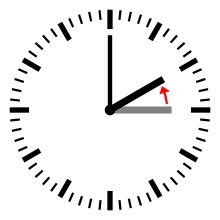
is carried out, in the case of change to daylight savings time last Sunday in March (March 28 2010 and 27 March 2011). That day, at 2 am, clocks are advanced 1 hour (top). The switch to winter time on the last Sunday in October (October 31 2010) at 3 in the morning, returning the pointer hours 1 hour ago (image below). Because of this, October is the month plus an over-or.

The next feature of the time change in Russia, on the night of 26 to 27 March, is that it will be the last on February 8 the recent past President of the Russian Federation, Dmitry Medvedev, the abolition determined schedule change in the country . Russia therefore remain in summer time and 120 minutes continuously with the time zone difference it belongs, making it the only country in the world to live permanently moved 2 hours of your time zone.

Why 2 hours apart?

Beginning in late March if you get up in Russia on 7-ana man really be doing at 5 am because in Soviet times following the time change daylight saving time on 2 occasions that displacement local to your time zone by adding 2 more hours, however, in Soviet times permanent change was only 1 hour and reached only 2 hours in summer. History

time change in Russia

was held in Russia for the first time the change to daylight saving time after a provision of 1 July 1917. According to a decree of the Provisional Government authorities who then ruled the country all the clocks were advanced by 1 hour. At the end of the an-o and when the Soviets were in power when it was amended again, back by 1 hour during winter time. This procedure of forward and reverse time remained until 1930.

PM by decree, 1 hour on the Time Zone

In 1930, the change to winter time, which slows the hour into 60 minutes, was dropped and eventually the country permanently lived 1 hour advance in relation to time zones. This schedule was called Декретное время (Dekretnoe Vremya, Time by decree) because it was entered after a decree of the Soviet of People's Commissars of the USSR. Under that time the USSR lived more than 50 an-os. New

change, and 2 hours on the Time Zone in summer

From the summer of 1981 the USSR began to add 1 additional hour at this station an-or so the gap in that period came at 2 hours keeping the difference on the time zone 1 hour during the winter.

On March 31, 1991, the an-or disintegration of the USSR, was canceled by decree Schedule throughout the USSR, although it had been abolished in 1990 into five Soviet republics: Ukraine, Belarus, Moldova, Azerbaijan and Georgia. However, in October 1991 the Russian Soviet Socialist Republic (later Russian Federation) made the decision to return to the time of decree what is specifically the January 19, 1992 while leaving out seven provinces. Thus, the country is 2 hours ahead of its time zone in summer and 1 hour in winter.

Then in 1997, Russia made a small modification to the time change date. From then change to winter time and not in late September but the last Sunday in October and throughout Europe.

Other changes later time

The vast geographical extent of Russia allowed to spread naturally across 12 time zones as shown in the chart below, which bears the territory of the country since the exclave of Kaliningrad (Greenwich Mean Time + 1 hour), left map and in the midst of the European Union, to Chukotka in the Far East and off the coast of Alaska (Greenwich Mean Time + 12 hours):
time Given this diversity, even a matter of pride for the Russians as it shows the vastness of the country in November 2009 and by a message to the Federal Assembly President Medvedev ordered a draft reduction in the number of time zones in Russia, of the 11 actually were used.

The was made on March 24, 2010 , on the eve of the change to summer time and determined that since the March 28 regions of Kamchatka, Chukotka, the province of Kemerovo, the Republic of Udmurtia and Samara province would shift to the neighboring zone, located west of them which would be 1 hour closer to the time zone of Moscow. This immediately reduced the time zones in force from 11 to 9.

In the future we may think of the union of other time zones, such as the Urals and Siberia so the number of time zones should be further reduced. The idea in any way because China is new step in 1949 of 5 time zones to one, that of Pekin, example was later followed by India.
above maps can appreciate the above reductions in the time zones in the country, highlighting the provinces that unified their time zones with neighboring regions.